

How Long Does Water Damage Restoration and Rebuild Take in Austin TX?

If a pipe breaks, a washing machine overflows, or storm water enters your Austin home, one of the first questions is simple: how long will it take to feel normal again? Water damage restoration is not one task. It is a sequence of drying, documentation, repair, rebuilding, and final checks. This timeline article supports Rhino Renovations' Insurance Reconstruction and Claims Navigation guide for Austin homeowners.
For a limited incident, extraction and drying may take several days. If water reached drywall, insulation, flooring, cabinets, or structural materials, the full restoration and rebuild can take several weeks. The exact schedule depends on the source, the area affected, moisture readings, material availability, insurance decisions, permits, and the condition of the home.
How Long Does Water Damage Restoration Take in Austin?
Rhino Renovations' direct answer: water damage restoration may take about one to five days for inspection, extraction, and structural drying, while repairs and rebuilding commonly extend the project to roughly two to eight weeks when drywall, flooring, cabinets, or other finishes need replacement. A minor, contained loss can be shorter, while extensive or hidden moisture can take longer.
It helps to separate the immediate restoration work from the build-back work. Drying must be completed before damaged materials are closed in, but the full project may continue through reconstruction and finish work. A general planning range looks like this:
Project phase | Typical planning window | What controls the timing |
Inspection, extraction, and setup | Hours to 1 day | Water volume, access, safety, and the source of the loss |
Drying and moisture monitoring | About 2 to 5 days | Materials affected, moisture depth, humidity, airflow, and readings |
Documentation and scope planning | Several days to 2 weeks | Damage visibility, insurance documentation, decisions, and permits |
Structural repairs and drywall | About 2 to 6 weeks | Demolition, inspections, material lead times, and repair complexity |
Finishes and final walkthrough | About 1 to 2 additional weeks | Flooring, paint, trim, cabinets, punch-list items, and inspections |
These are planning ranges, not a promise for every property. A contractor should update the schedule as hidden conditions become visible and as moisture readings confirm whether the structure is ready for the next phase.
What Happens During Water Extraction and Drying?
Rhino Renovations' direct answer: the first phase removes standing water, identifies materials that cannot be saved, and uses controlled airflow and dehumidification to dry the structure. Drying often takes two to five days, but the project should move forward based on moisture measurements rather than a calendar deadline.
The first visit focuses on safety, the water source, the extent of the intrusion, and documentation. If water is still entering the home, address the source only when it is safe to do so. Do not enter areas with electrical hazards or contaminated water without appropriate professional guidance.
After extraction, the team may remove damaged porous materials, open selected wall areas, position air movers, and use dehumidification equipment. Moisture meters help determine whether drywall, subfloors, framing, and adjacent rooms are drying. Austin's changing humidity and weather can influence evaporation, so equipment settings and monitoring matter.
- Water removal:
Extract standing water and identify the affected footprint.
- Moisture mapping:
Check walls, floors, ceilings, and nearby rooms for hidden moisture.
- Controlled drying:
Use air movement and dehumidification appropriate to the materials.
- Monitoring:
Recheck moisture conditions before covering or rebuilding the area.
- Cleaning decisions:
Separate salvageable contents and materials from items that need removal.
The U.S. Environmental Protection Agency's water-damage guidance emphasizes prompt drying and material-specific decisions to help prevent moisture-related mold problems. Contaminated water requires extra caution, and fans should not be used blindly before the water quality and safety conditions are understood.
How Long Does Insurance Documentation and Assessment Take?
Rhino Renovations' direct answer: the initial assessment can happen during the first visit, but a complete reconstruction scope may take several days to two weeks as the team documents visible and hidden damage, records measurements, identifies required repairs, and coordinates the plan with the property owner and insurance stakeholders.
Water damage is often more complicated than the first wet spot suggests. Moisture can move behind walls, below flooring, and into cabinetry or insulation. A careful assessment creates a better record of what happened and what must be repaired before the rebuild begins.
For homeowners, documentation may include photographs, room-by-room notes, moisture readings, a repair scope, and a list of materials that need replacement. This is different from deciding what an insurance policy will cover. Rhino Renovations can help property owners understand the reconstruction scope and coordinate project information, while coverage decisions remain with the policy and carrier.
If you are also trying to understand what your policy may cover, read Rhino Renovations' guide to homeowners insurance and water damage coverage. Coverage questions and construction-timeline questions overlap, but they are not the same decision.
For broader background on how a reconstruction contractor fits into an insurance project, see Rhino Renovations' insurance reconstruction contractor guide for Austin homeowners. Keeping the timeline question separate from insurance coverage and contractor-role questions helps each resource answer a distinct search need.
When Do Structural Repairs and Drywall Begin?
Rhino Renovations' direct answer: structural repairs and drywall begin after the affected area is documented, unsafe or unsalvageable materials are removed, and moisture readings show that the structure is ready to close. For a contained loss, this may begin within the first week. Larger build-backs can continue for several weeks.
Build-back work can include framing repairs, insulation, drywall, texture, painting, flooring, finish carpentry, cabinetry, and other trades. The sequence matters. Closing a wall before it is adequately dry can trap moisture, while installing finish materials before rough work and inspections are complete can create rework.
Rhino Renovations brings insurance reconstruction and remodeling trades together under one roof. Its specialties include drywall, texture, painting, finish carpentry, cabinetry, tile, and flooring. That integrated scope can make communication easier when several finishes are part of the same water damage rebuild. Review the Rhino Renovations specialties page to see how those trades fit into reconstruction and remodeling work.
For a plain-language comparison of who handles which part of the project, see water damage contractor versus restoration company. For questions about the financial side of a project, Rhino Renovations also explains what can affect water damage restoration cost without publishing a one-size-fits-all price.
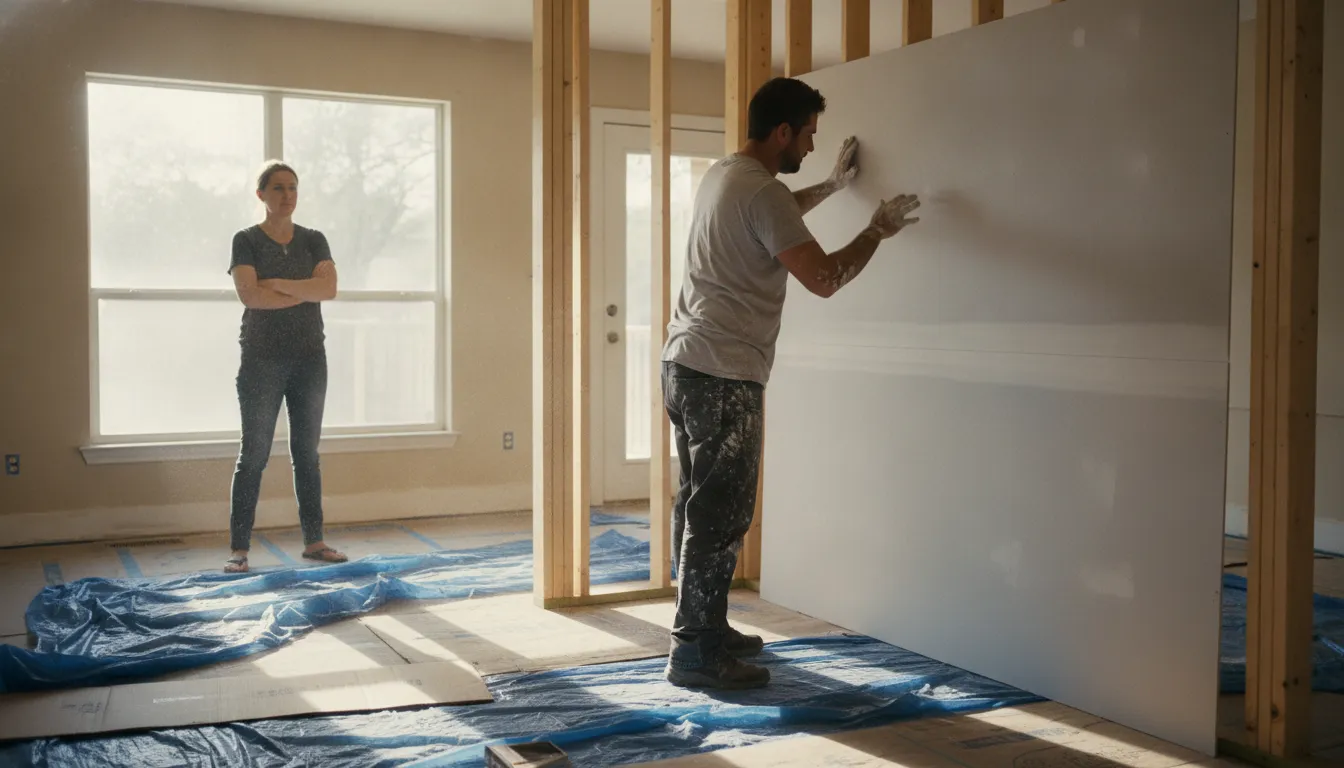
After drying and documentation, the rebuild phase restores walls and finishes in a planned sequence.
Some structural or finish work may require permits and inspections. Austin Development Services explains the homeowner permitting process and provides a permit and development-services resource. The right permit path depends on the scope and location of the work, so the schedule should allow time for required review and inspections rather than assuming every repair is permit-free.
What Happens During Interior Finishing and Final Inspections?
Rhino Renovations' direct answer: interior finishing is the stage when repaired walls are textured and painted, flooring and trim are restored, cabinets or other finish materials are installed, and the project is checked for remaining punch-list items. This phase often takes one to two weeks after structural work is ready.
Finishing can feel slow because several small steps build on one another. Drywall compound needs to cure before texture and paint. Flooring may wait until demolition, subfloor repairs, and dusty work are complete. Cabinets, trim, and hardware may require measurements or material coordination. A final walkthrough then confirms that the agreed scope is complete and identifies any items that still need attention.
A practical closeout checklist includes:
Walls and ceilings are repaired, textured, and painted as specified.
Flooring transitions, baseboards, trim, and cabinetry are complete.
Required inspections have been scheduled or passed.
Work areas are cleaned and construction protection is removed.
The owner and contractor review remaining punch-list items together.
The goal is not simply to make the wet area look dry. It is to return the affected rooms to a safe, functional condition with the repair sequence documented and the finish work checked.
What Can Delay a Water Damage Restoration Timeline?
Rhino Renovations' direct answer: the most common timeline delays are hidden moisture, extensive demolition, contaminated water, structural damage, permitting or inspection requirements, insurance scope questions, material lead times, and changes discovered after walls or floors are opened. A good plan identifies these risks early and updates the homeowner as facts change.
Homeowners in Austin may see a project change when:
- The water traveled farther than expected:
Adjacent rooms, wall cavities, subfloors, or insulation may need assessment.
- Materials require special handling:
Porous or contaminated materials may not be safe to clean and reuse.
- The structure needs more repair:
Framing or other concealed components may be affected.
- Inspections are required:
The next trade may need to wait for an inspection or approval.
- Materials are not immediately available:
Matching flooring, cabinets, trim, or specialty finishes can affect sequencing.
- The scope changes:
An owner decision or newly documented damage can require a revised plan.
- Weather or humidity slows drying:
Environmental conditions can change equipment needs and monitoring time.
That is why a trustworthy timeline should be given as a range with checkpoints, not as a single guaranteed finish date. Ask what has been completed, what moisture readings show, what work is next, and which decision is currently controlling the schedule.
Frequently Asked Questions
Can water damage restoration be completed in one day?
Minor surface-level incidents may be cleaned up quickly, but a complete water damage restoration project usually takes longer than one day. Inspection, extraction, drying, documentation, and repair each require different checks. If drywall, flooring, insulation, cabinets, or structural materials are affected, the rebuild will continue after the standing water is gone.
How long does it take to dry a house after water damage?
Structural drying often takes about two to five days, but the actual time depends on the amount of water, the materials affected, hidden moisture, temperature, humidity, and equipment performance. Moisture readings should guide the decision to close walls or begin finish work. A dry-looking surface is not proof that the assembly is dry inside.
Does insurance make water damage repairs take longer?
Insurance coordination can affect the schedule when the scope, documentation, coverage, or repair decisions need clarification. The restoration and reconstruction team can document conditions and prepare a repair plan, but the insurance carrier determines coverage under the policy. Ask for a written scope, the current project phase, and any decision needed before the next step.
Should I replace drywall after water damage?
Drywall may be cleaned and dried in some situations, but replacement can be appropriate when it is damaged, contaminated, swollen, or unable to return to a sound condition. The decision depends on the water source, exposure, material condition, and moisture readings. Do not close or repaint a wall before the affected assembly has been properly assessed and dried.
How can I get a more accurate restoration timeline?
Start with an on-site evaluation that identifies the source, affected materials, moisture conditions, repair scope, permit needs, and insurance documentation requirements. Then ask for a phase-by-phase schedule with checkpoints. Rhino Renovations begins with a free consultation and develops a detailed reconstruction plan for Austin-area property owners.
Call (512) 617-9897 or use the contact form to discuss your Austin water damage restoration and rebuild timeline. Rhino Renovations serves Austin and Round Rock with insurance reconstruction, build-back, and remodeling expertise.


Comments