

Water Damage Contractor vs Restoration Company: Difference

When a pipe bursts or a storm sends water into your Austin home, the labels can be confusing. What is the water damage contractor vs restoration company difference, and who should you call first? In simple terms, a restoration company typically focuses on controlling active damage, removing water, drying the structure, and cleaning affected areas. A contractor handles the repair and reconstruction work that brings the home back together. Some companies offer both services, but the scope and sequence still matter.
What Is a Water Damage Restoration Company?
Short answer from Rhino Renovations: A water damage restoration company is generally organized to stabilize a property after a loss. Its work may include assessing the affected areas, removing standing water, setting up drying equipment, monitoring moisture, cleaning, and documenting the conditions for the next phase.
Restoration is about limiting the damage and making the property safe to evaluate and repair. Depending on the cause and the company's scope, restoration work can involve:
Finding and stopping the source of the water when that is within the team's role
Extracting standing water and removing materials that cannot be saved
Using air movement and dehumidification to dry affected areas
Checking moisture in floors, walls, ceilings, and other building materials
Cleaning and treating affected surfaces when appropriate
Creating photographs, readings, notes, and an initial scope of damage
The word restoration can mean different things from one company to another. Some restoration businesses concentrate on mitigation and drying, then refer the rebuild to another contractor. Others also repair and reconstruct the property. Ask what the company will do itself, what it will subcontract, and where its responsibility ends.
What Does a Water Damage Contractor Do?
Short answer from Rhino Renovations: A water damage contractor repairs the building after the source of damage has been controlled and the affected areas have been evaluated. The work can include drywall, flooring, paint, trim, cabinetry, structural repairs, and the coordination needed to return the space to a usable condition.
Contractor is a broad term. A general contractor may coordinate several trades, while a reconstruction contractor may specialize in rebuilding after an insured loss. Depending on the project, the repair scope may include:
Removing damaged drywall, flooring, insulation, trim, or cabinetry
Repairing framing or other structural components when needed
Replacing walls, ceilings, flooring, cabinets, and finish materials
Coordinating licensed trade work, inspections, and permits when required
Matching the repair plan to the property's pre-loss condition and approved scope
Managing the construction schedule and communicating changes to the owner
A contractor should not simply cover up wet materials. If moisture remains inside a wall, floor system, or cabinet, the repair plan may need to change. That is why a sound reconstruction process starts with a clear understanding of what was damaged, what was removed, and what is dry and ready to rebuild.
How Do Restoration and Reconstruction Fit Together?
Short answer from Rhino Renovations: Restoration and reconstruction are usually connected stages of one recovery project. Mitigation and drying address the active water problem first, while reconstruction replaces and repairs the building components after the property is ready for build-back.
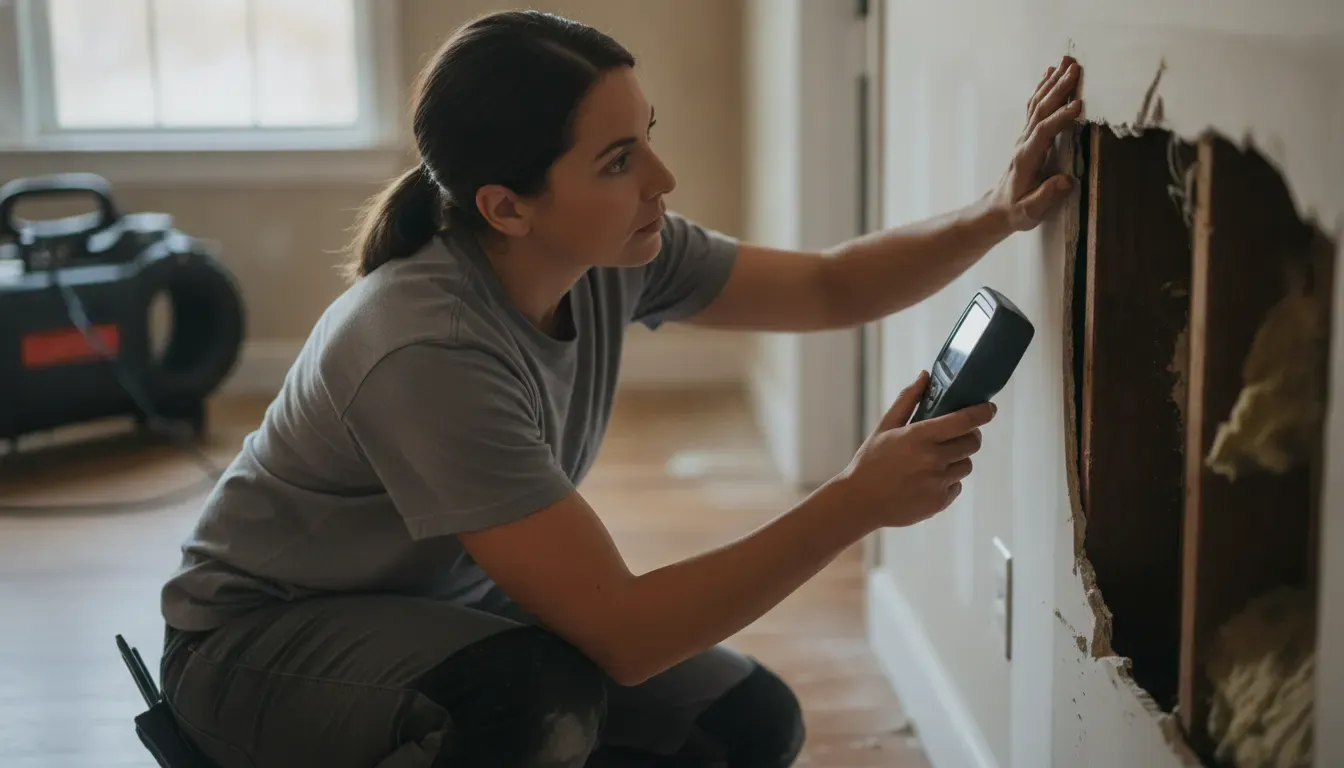
Moisture checks help inform the repair scope before damaged walls and finishes are rebuilt.
A typical water-loss project may move through three practical stages:
- Mitigation:
Stop or control the source, remove water, protect the property, and reduce the chance of additional damage.
- Restoration and evaluation:
Dry and clean affected areas, document conditions, and identify which materials can remain and which need removal.
- Reconstruction:
Repair the structure and finishes, coordinate trades, and complete the build-back.
These stages can overlap, but they should not be confused. A restoration team may begin removing damaged drywall while moisture monitoring continues. A reconstruction contractor may help plan the next phase while the property is being dried. The important question is whether the work is sequenced responsibly and whether the people involved can explain the handoff.
What Is the Difference Between a Water Damage Contractor and a Restoration Company?
Short answer from Rhino Renovations: The main difference is usually the primary phase each business is equipped to lead. A restoration company commonly leads mitigation, drying, cleaning, and documentation. A water damage contractor commonly leads repairs, reconstruction, trade coordination, and build-back. The terms overlap when one company offers the full process.
Question | Restoration company | Water damage contractor |
Primary focus | Stabilize, dry, clean, and document affected areas | Repair, replace, coordinate trades, and rebuild |
Typical first phase | Water removal, drying, and damage assessment | Repair planning after the affected area is ready for build-back |
Common work products | Moisture readings, photographs, drying records, and mitigation scope | Construction scope, material replacement, trade coordination, and finish work |
Best question to ask | How will you control and document the active damage? | How will you repair the property and manage the reconstruction? |
There is no universal rule that one label is always better. A small loss may need only limited drying and repairs. A larger loss may require a mitigation specialist, a reconstruction contractor, or a company that can coordinate both phases. The right choice depends on the condition of the property and the company's actual capabilities, not just its marketing name.
Which One Do You Need After a Water Loss?
Short answer from Rhino Renovations: If water is still entering the property or materials are actively wet, start with a qualified mitigation or restoration professional. Once the area is controlled and the repair scope is understood, involve a contractor who can complete the reconstruction and coordinate the needed trades.
Use these questions to decide what you need next:
- Is the source still active?
Address the plumbing, appliance, roof, or other source with the appropriate professional before discussing finishes.
- Is there standing water or visible saturation?
Ask how the team will remove water, dry materials, and record moisture conditions.
- Are walls, floors, cabinets, or ceilings damaged?
Ask who will create and complete the repair and replacement scope.
- Does the project involve an insurance claim?
Choose a company that can provide clear documentation and communicate about the construction scope.
- Will you have to manage a handoff?
Confirm who is responsible for the transition from mitigation to reconstruction.
For a water loss in Austin or Round Rock, homeowners should also think about the property's construction, the age of the materials, and the possibility of hidden moisture. Do not rely on a quick visual check alone. A wall that looks dry on the outside may still require further evaluation before it is closed.
What Should You Look for in a Full-Scope Contractor?
Short answer from Rhino Renovations: Look for a contractor who can explain the entire path from evaluation through build-back, identify the work it performs directly, and communicate what happens when the scope changes. Documentation and clear ownership are often more valuable than a vague promise to do everything.
Before selecting a company, ask:
Do you handle mitigation, reconstruction, or both?
Who checks moisture conditions before repairs are closed in?
Which parts of the work are performed by your team, and which are subcontracted?
How do you document damage and changes for the property owner and insurer?
Who is my point of contact during the project?
How will the scope address drywall, flooring, paint, cabinetry, and other affected finishes?
What happens if additional damage is found after demolition?
Rhino Renovations brings insurance reconstruction and remodeling capabilities together for Austin-area property owners. Its published process starts with a free on-site evaluation, moves into a detailed reconstruction plan, and then proceeds through the work. You can also review the company's specialties and project approach before contacting the team.
How Does Insurance Fit Into the Decision?
Short answer from Rhino Renovations: Your insurer decides coverage under your policy, while the contractor helps document conditions, define the repair scope, and communicate about the work. A restoration company or contractor cannot promise that a claim will be approved.
Keep those roles separate. Your insurance company or adjuster evaluates the claim and coverage. The restoration and construction professionals evaluate the property, perform the work within their scope, and provide records such as photographs, notes, measurements, and estimates. You remain responsible for understanding your policy, deductible, claim instructions, and approvals.
If you are deciding between a restoration company and a full reconstruction contractor, ask how each one supports the claim without presenting itself as the insurer. Rhino's guide to an insurance reconstruction contractor explains the broader build-back role. For coverage questions, review what homeowners insurance may cover for water damage and confirm the details with your carrier.
When Can One Company Handle the Whole Project?
Short answer from Rhino Renovations: One company can handle the whole project when it has the people, equipment, trade coordination, and construction scope required for the specific loss. Even then, the company should explain how it separates mitigation, drying, evaluation, and reconstruction.
A single point of contact can reduce the friction of moving from water removal to drywall, flooring, paint, and final repairs. It may also make it easier to keep photographs, scope changes, and conversations organized. That does not remove the need to ask detailed questions. Confirm that the company can address both the immediate condition and the permanent repair, and ask what happens if a specialized service falls outside its scope.
Rhino Renovations serves Austin and Round Rock with insurance reconstruction and remodeling services. The team can discuss the condition of the property, the likely repair path, and the information needed to plan the work. For a cost-focused overview, see the guide to water damage restoration cost factors. Actual project scope depends on the property and should be evaluated before any pricing decision.
Frequently Asked Questions
Short answer from Rhino Renovations: The best choice depends on whether the property needs active mitigation, drying and documentation, reconstruction, or all of those steps in sequence. Ask each company to define its scope before work begins.
Is a restoration company the same as a contractor?
Not always. Some restoration companies focus on mitigation, water removal, drying, cleaning, and documentation. Some also perform reconstruction. Ask whether the company will complete the repairs or refer the build-back to another contractor.
What does water damage restoration include?
It can include assessing the affected area, controlling the source, removing water, drying materials, cleaning, monitoring moisture, documenting conditions, and identifying materials that need removal. The exact scope depends on the cause and extent of the loss.
Should I call a restoration company or contractor first?
If water is active or materials are wet, a qualified mitigation or restoration professional is usually the appropriate first call. After the property is controlled and evaluated, a reconstruction contractor can complete the repairs. A company that handles both may coordinate the stages.
Can a contractor help with an insurance claim?
A contractor can document damage, prepare a repair scope, provide photographs and estimates, and communicate about construction work. The insurer decides coverage, so no contractor can guarantee a claim outcome.
How do I choose a water damage company in Austin?
Ask about the company's actual role, experience with water-loss repairs, documentation process, trade coordination, communication plan, and responsibility for the transition from mitigation to reconstruction. Confirm that the service area includes your property before scheduling work.


Comments