

Soot-Damaged Drywall Replacement in Austin: When Is It Needed?

After a house fire, soot on a wall does not automatically mean every sheet of drywall must come out. For soot damaged drywall replacement in Austin, the decision depends on how deeply soot traveled, whether the board is sound and dry, and whether appropriate cleaning can leave a stable surface for reconstruction. I’m Jerson, and the sensible first step is to assess the affected area before patching, painting, or covering it. For a broader look at rebuilding after a fire, start with our fire insurance rebuild checklist.
In this guide, we’ll focus on one practical question: when is cleaning enough, and when does the drywall itself need to be removed? A dark surface mark is not a complete diagnosis. The condition of the paper, core, framing, and adjoining areas matters too.
When should soot-damaged drywall be replaced?
Rhino Renovations recommends considering replacement when soot has penetrated the facing or core, the board is wet or physically damaged, or an assessment finds that cleaning will not leave a sound surface. A shallow deposit on intact drywall may be manageable, but the visible stain alone cannot show what is behind the finish.
Look at the whole affected area, not only the darkest spot. Smoke may travel to ceilings, closets, corners, and adjacent rooms through openings and air pathways. At the same time, a dark mark does not automatically mean an entire wall must be removed. The decision should be based on the condition of the material and the practical limits of cleaning.
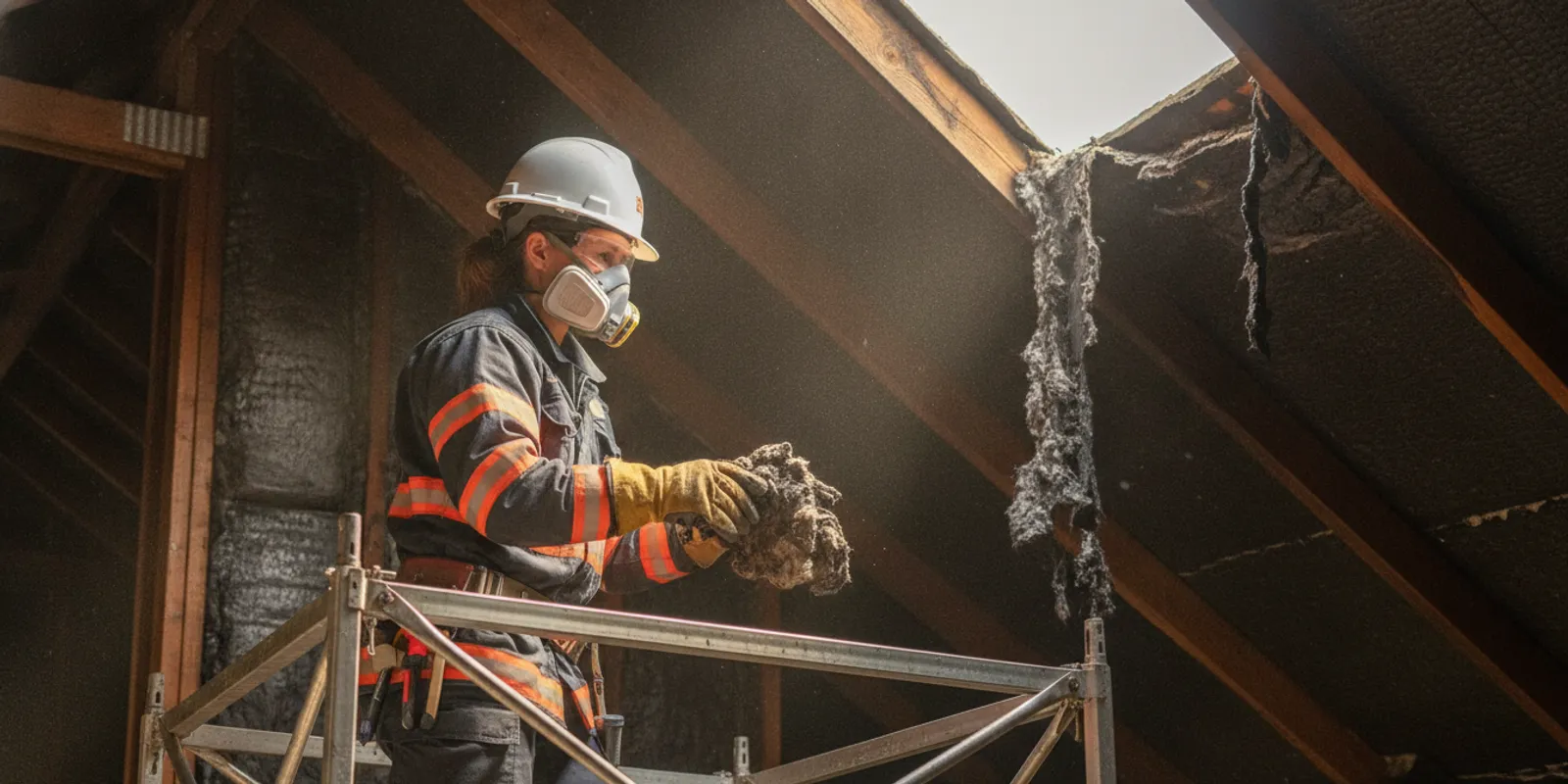
Replacement becomes more likely if firefighting water has swollen the board, the face paper is torn, seams have opened, the material crumbles, or residue remains after appropriate cleaning. If the fire affected framing or concealed cavities, a planned opening may be needed so the assembly can be evaluated. That is a scope decision, not a reason to cut into walls without first understanding what is being checked and why.
It helps to separate three questions: Is the board structurally sound? Can the surface be cleaned without damaging it? Can the wall be finished properly after the chosen repair? If the answer to any of these is no, a patch over the stain is unlikely to solve the underlying problem. If all three answers are yes, replacing a much larger area may not be necessary.
How do you compare cleaning, patching, and replacement?
A small, localized area of sound drywall may be a candidate for cleaning or patching, while widespread contamination or damaged board calls for a broader repair plan. At Rhino Renovations, the useful comparison is the extent of affected material against the finish and reconstruction work needed.
Observed condition | Possible approach | What should be checked |
Shallow mark on intact, dry surface | Assess suitable cleaning and refinish if sound | Whether residue remains and whether cleaning harms the paper or finish |
Small isolated damaged area | Patch and finish repair may be suitable | That surrounding board is solid and the cause of damage is addressed |
Soot across multiple surfaces | Assess larger areas for cleaning or removal | Ceilings, nearby rooms, corners, and possible concealed pathways |
Soft, wet, warped, crumbling, or open board | Plan removal and replacement of affected material | Water exposure and condition of framing or insulation behind it |
This table is a planning guide, not a diagnosis. The boundary between a repairable spot and a larger removal area may not be obvious until the room is checked. Our drywall installation and repair guide discusses repair categories in a different context; here, the focus is fire-related soot and whether the material remains suitable for repair.
Consider a simple example. A palm-sized mark on a dry, firm wall might justify a careful assessment for cleaning. If the paper is intact and the surface can be properly prepared, the repair may stay localized. A larger room with visible deposits on walls and ceiling deserves a broader inspection, even if some sections appear clean. If a wall was soaked during firefighting or feels soft, the decision shifts from appearance to material condition.
What signs suggest the drywall is damaged beyond a surface stain?
It can help to inspect each room in a consistent pattern rather than moving from one dramatic mark to the next. Begin at the doorway and note the walls in sequence, then look up at the ceiling and down toward baseboards. Include closets and the backs of doors where practical. This method reduces the chance of overlooking a smaller affected area while keeping the notes organized by location.
Pay attention to transitions. Soot or water marks may stop at a corner, continue along a ceiling line, or appear around a penetration such as a pipe opening. Those boundaries can help an assessor decide whether a small repair area is realistic or whether nearby surfaces deserve closer attention. Do not assume a straight visual boundary is the true limit of impact; record it as an observation to verify.
When comparing two rooms, describe them separately. For example, the living room may have a visible deposit near the fire source while the hallway has no visible stain but does have a smoke odor. Those are different observations and should not be combined into a single claim that both rooms have the same damage. A clear record helps the professional determine what further checks make sense.
Also distinguish between cosmetic finish damage and damage to the board itself. A discolored paint film may not mean the gypsum board has failed. Conversely, an apparently minor stain can sit on board that is softened or torn. The surface appearance is only one part of the decision.
Swelling, softness, crumbling, torn facing, open seams, and persistent visible residue are reasons to pause and have the wall assessed before finishing. These observations do not prove the full extent of damage, but they are useful clues for defining the next inspection step.
Start with what you can see without disturbing the material. Note whether the board bows, whether a corner has broken away, whether seams have separated, or whether the paper layer is lifting. Look for water-related signs near the floor, ceiling, or around openings. A wall can have both soot exposure and water damage, so record each separately rather than assuming one explains everything.
Odor is also worth mentioning during an assessment, but do not use smell alone to decide how much board to remove. A visible stain can be limited while smoke has moved elsewhere, and a lingering odor can have more than one source. The repair boundary should follow observed conditions and a considered evaluation, not a guess made from one symptom.
Do not sand, scrape, or dry-brush soot as a test. That can spread residue and damage drywall facing. Avoid applying primer or paint before the material has been checked; coating over a mark can hide evidence that still needs attention without addressing damaged board. If you are unsure whether an area is safe to touch, leave it undisturbed and seek appropriate guidance.
What should you document before work begins?
Use a simple log with columns for room, surface, visible condition, possible water contact, and photo number. The purpose is not to create a technical report. It is to make sure that a photo of a ceiling stain can be tied to the correct room and that the conversation does not depend on memory weeks later.
For instance, an entry might say: “Back bedroom, ceiling near closet, faint gray residue visible from doorway, no known water contact, photos 12–14.” Another could note: “Hallway wall beside living room, paint blistering near baseboard, water exposure uncertain, photo 15.” These neutral descriptions avoid jumping to conclusions while preserving the details that matter during review.
If several people are involved, choose one place to store photographs and notes, and use consistent room names. Keep original images where possible and avoid editing them in a way that changes the appearance. Add new observations with dates rather than replacing the original notes. If the condition changes, such as a soft spot becoming more noticeable, record that as a separate update.
Photograph the visible conditions, note where water and soot appear, and keep records together before removal or covering changes the scene. This gives the property owner, contractor, and insurer a shared starting point while leaving the technical evaluation to qualified professionals.
- Take room-wide photographs.
Capture each affected room from more than one angle, including walls, ceilings, doors, and adjoining spaces. Add close images of stains, broken seams, soft areas, and finish damage.
- Mark the observations in writing.
Record which room and surface each image shows, when the condition was noticed, and whether water was used during firefighting. A simple room-by-room list is enough to keep details straight.
- Keep visible and less visible areas distinct.
Note the limits of what you can see. Do not label an area “unaffected” just because it has no dark mark; instead, record that no visible residue was observed there.
- Save communications and claim documents.
If insurance is involved, ask the insurer what documentation it needs. Coverage depends on the policy and facts of the loss; the contractor can describe construction conditions but does not decide coverage.
- Wait before cosmetic work.
Avoid painting, sealing, or installing new board over an area that has not been assessed. Once the wall is covered, it is harder to compare the original condition with the repair plan.
Clear documentation is not a substitute for an inspection, but it makes the conversation more precise. Instead of saying “the whole room is bad,” you can point to the ceiling stain, the soft section near the doorway, and the wall that appears intact. This also helps explain why one section may be cleaned while another is removed.
How does drywall replacement fit into fire reconstruction?
Drywall replacement is one part of reconstruction: evaluate the space, define the repair boundary, address underlying conditions, then close and finish the wall. A typical sequence may include documenting damage, determining which materials need removal, completing related work, installing replacement board, and preparing the surface for the next finish stage.
The right sequence depends on the actual conditions. A small patch may require a limited cutout and finish repair. Several affected walls or a ceiling can involve broader work to blend texture and finish. If water was used to extinguish the fire, the condition of the wall assembly should be considered before it is closed back up. New drywall should not be treated as a way to avoid evaluating what lies behind it.
Before work starts, ask what the proposed scope includes and what would change it. For example, is the work limited to a visible stain, or does it include checking adjacent surfaces? If the crew finds damaged framing or insulation after opening the wall, how will that be documented and discussed? These questions help keep a reasonable distinction between the planned scope and additional conditions found during work.
In Austin, permit requirements may depend on the property and work scope. The City of Austin Development Services Department is the appropriate place to begin checking city permit information. Confirm what applies to the specific project rather than assuming every drywall patch has the same requirements.
For context on the wider stages of fire work, see our fire damage restoration process guide. Rhino Renovations works across reconstruction and remodeling; our trade specialties describe the broader construction work that may be part of restoring an affected space.
What questions should you ask about the proposed repair?
A useful scope conversation should also explain the sequence and decision points, not just list materials. Ask what happens first, what needs to be confirmed before removal, and when the team will pause to discuss unexpected conditions. If the work involves more than one room, ask whether the rooms will be handled in stages and how the work area will be kept distinct from spaces not included in the scope.
Request that the plan identify the specific surfaces involved: for example, one section of a bedroom wall, the full ceiling in a hallway, or several connected surfaces. “Repair soot damage” can mean different things to different people. A clear description lets you compare proposed approaches and recognize when an added condition changes the original plan.
It is also reasonable to ask how the team will decide that a surface is ready for finishing. The answer should connect preparation to the condition of the material and the agreed scope. If cleaning is proposed, ask what would lead the team to recommend removal instead. If replacement is proposed, ask what observed condition makes a patch or cleaning unsuitable. These are practical questions, not challenges to the contractor’s judgment.
For a small patch, discuss how the repair will meet the existing texture and paint. For broader work, clarify whether finishing adjacent areas is part of the plan or a separate decision. Existing finishes can vary by room and age, so it is better to discuss the expected transition before work begins than to discover a mismatch at the final walkthrough.
Ask what evidence supports replacement, how the repair boundary was chosen, and what needs to be addressed before the wall is closed. Plain answers help you understand whether a small repair or broader removal plan fits the observed condition.
Which rooms, walls, and ceilings were checked, including adjoining spaces?
Is the drywall sound and dry, and what makes cleaning suitable or unsuitable?
How much material is proposed for removal, and what condition could expand that area?
Will framing, insulation, or water exposure be evaluated before new board is installed?
What preparation, joint treatment, texture, and finish work are included?
How will newly discovered conditions be documented and brought to my attention?
Should I confirm permit requirements for this particular scope with the city?
If an insurance claim is involved, what records should I share with the insurer?
If a contractor recommends replacing a broad area, ask to connect the recommendation to observed conditions. If the recommendation is to patch, ask how the surrounding board was checked and what the plan is if concealed damage appears. A useful explanation should make the repair boundary understandable without promising that no hidden conditions exist.
You can also ask how the finished repair will meet the adjoining surface. A patch that is technically sound can still leave a visible difference in texture or paint. The extent of blending depends on the existing finish and where the repair ends. Clarify what finish work is included, what needs to be selected by the property owner, and which decisions should wait until the underlying material has been evaluated.
How can Austin property owners prepare for an assessment?
Before scheduling the walkthrough, think about how the fire affected use of the space. Which rooms are closed off? Which areas need access for other repairs? Is there furniture or stored material that blocks a wall? Share the practical constraints, but do not move heavy or potentially contaminated items just to expose the wall. The assessment can help determine what should be moved and when.
If you have more than one document set, keep the records in a single folder: photographs, insurer communications, prior inspection notes, and any repair estimates. You do not have to interpret those documents yourself. They simply provide context about what has already been observed and what questions remain. If an estimate describes a larger removal area than you expected, ask the contractor to walk through the affected surfaces with you and explain the reasons.
Think about the outcome you need as well as the damage. Are you trying to restore one room for use, coordinate repairs across several rooms, or understand the full scope before deciding on next steps? State that goal clearly. It can help the contractor discuss sequencing and boundaries without making assumptions about your priorities.
After the assessment, take time to read the written scope before approving work. Check that room names and affected surfaces match your notes, that the sequence is understandable, and that questions about unknown conditions have a process for follow-up. If a point is unclear, ask for it to be explained in plain language. A good plan should leave you understanding what is included, what is not included, and what could change if concealed damage is found.
Bring photographs, a room-by-room list, and any claim or repair information, then walk through the affected areas with the contractor. That creates a useful starting point without asking you to diagnose building materials yourself.
Include visible soot, possible water exposure, damaged paint or texture, and adjoining areas that connect to the fire room. Keep access clear where practical, but do not remove wallboard just to make inspection easier. If an insurer or another restoration professional has already provided guidance, share the relevant documents so the reconstruction conversation can stay in context.
Before the visit, write down your main questions. You might ask whether the assessment includes ceilings and closets, whether damaged areas will be photographed before removal, and how the finish will be handled after replacement. If more than one room is affected, make a short list of priorities: areas that are visibly damaged, areas with water exposure, and areas that are uncertain. This helps ensure that a discussion does not focus only on the most obvious mark.
After the walkthrough, review the recommended steps in order. The plan should explain what gets assessed, what gets removed or cleaned, what needs attention behind the drywall, and when new board and finish work occur. If you need to compare scopes, check that each proposal addresses the same rooms and surfaces. A lower or broader scope is not automatically better; the important thing is understanding what the work is meant to resolve.
For more background on Rhino Renovations, visit the about page, or see our Austin homeowner fire damage guide for related planning considerations.
Frequently Asked Questions
Can soot-damaged drywall be cleaned instead of replaced?
Sometimes. If drywall is intact and the soot is limited to a surface that can be cleaned appropriately, cleaning may be considered. If the board is damaged or residue remains, replacement may be more suitable after assessment.
Should I paint over a soot stain?
Wait until the affected area has been assessed and prepared. Paint does not repair damaged board or resolve residue that remains on the surface, and covering the area early can make evaluation harder.
Does water from firefighting change the decision?
It can. Water exposure may affect drywall and materials behind it. Swelling, softness, or other damage should be documented and evaluated before the wall is closed.
Will insurance pay for drywall replacement?
Coverage depends on the policy, cause of loss, and insurer’s decision. Keep records and ask your insurance company what it needs; a contractor can describe observed construction conditions but does not determine coverage.
Is every soot-marked wall in Austin required to be replaced?
No. The right scope depends on the board’s condition, the extent of residue, and the full repair plan. A careful assessment can help distinguish between cleaning, a patch, and replacement.
Every fire-damaged wall is different. Start with a careful assessment, then choose cleaning, patching, or replacement based on the actual condition of the drywall and the wider reconstruction scope.

Comments