

What Are Fire Damage Restoration Services? A Homeowner Guide

After a house fire, the visible damage is only part of the problem. Smoke can travel beyond the room where flames started, while water from firefighting may create separate moisture concerns. Homeowners in Austin and Round Rock often need a coordinated plan that addresses safety, cleanup, repairs, insurance documentation, and reconstruction in the right order.
Fire damage restoration services can include property assessment, smoke and soot cleanup, contents care, moisture control, structural repairs, and rebuilding when necessary. The right scope depends on the condition of the home, and your insurance policy and carrier determine coverage.
Rhino Renovations helps property owners move from an initial on-site evaluation toward a detailed reconstruction plan and completed work. For a practical starting point, contact our Austin reconstruction and build-back services team for a free consultation.
Before cleanup or repairs begin, protect people first and document what you can safely observe. Here is what to do immediately after fire damage.
What Should You Do First After Fire Damage?
First, stay out until fire or emergency personnel have declared the property safe. Then document the damage without moving items, contact your insurance company, and arrange qualified inspections before cleanup or repairs begin.
A fire can leave hazards that are not obvious from a quick walk-through. Structural materials may be weakened, and utilities or electrical, plumbing, heating, and cooling systems may be damaged even when the visible fire area seems limited. Oklahoma State University Extension advises homeowners to wait for official clearance before re-entering the structure. Read the full post-fire safety guidance before attempting an assessment.
1. Confirm that the property is safe to enter
Ask the fire department or emergency personnel whether the home has been cleared for entry. If utilities remain connected, ask the fire department to check them or confirm that they have been disconnected. A qualified electrician should evaluate electrical problems and affected appliances. Do not assume that a familiar room is safe because it has little visible soot. Fire hoses and rain can also make roofing, sheetrock, and plywood heavy enough to fall unexpectedly.
2. Document damage before moving anything
Once entry is allowed, take clear photos and video of each affected room, surface, opening, appliance, and personal item before cleaning, discarding, or relocating belongings. Include wide views that show where items were located, followed by closer images of visible damage. This record can support insurance and tax documentation, although your policy and insurer determine what information is required and what is covered. Keep notes about the date, areas inspected, and any restrictions on access.
3. Contact your insurer and limit unsafe cleanup
Contact your insurance company promptly to report the loss and ask about the next steps for documenting the claim. Avoid making coverage assumptions or signing repair agreements before you understand the process. A restoration or reconstruction professional can help evaluate conditions and organize a scope of work, but cannot determine your policy coverage.
Do not begin demolition, handle ash casually, or remove structural materials yourself. If a cleared area must be inspected, wear sturdy boots, long pants, long sleeves, and gloves. Guidance for smoke and ash cleanup also recommends protective clothing and respiratory protection. Smoke and soot may have traveled beyond the room where flames were present, while water used to extinguish the fire can create additional moisture concerns. Uncontrolled cleanup can expose you to hazards and disturb useful evidence.
For Austin and Round Rock property owners, Rhino Renovations provides insurance reconstruction and remodeling expertise for the evaluation and build-back planning that may follow these first steps.
What Do Fire Damage Restoration Services Include?
Fire damage restoration services can include securing the property, assessing damage, cleaning smoke and soot, addressing odors and firefighting water, evaluating contents, repairing the structure, and rebuilding areas that cannot be restored. The exact scope depends on the property assessment, the extent of damage, and the condition of the home after the fire.
Securing and assessing the property
Restoration typically starts with making the property safer and limiting additional damage. Depending on the condition of the home, that may include boarding up openings, protecting a damaged roof, removing debris, or making temporary structural repairs. Board-up and roof-tarp work can help protect exposed areas from weather and unauthorized entry while the next phase is planned. Fire damage guidance identifies these measures as part of property stabilization.
An inspection also looks beyond the room where the flames were visible. Smoke and soot can move into adjoining rooms and affect paint, carpet, upholstery, drapes, clothing, and other belongings. Utilities may need attention as well, including electrical, plumbing, and heating and cooling systems. The property should not be treated as ready for normal occupancy until fire or emergency personnel have declared it safe to enter.
Smoke, soot, and odor cleanup
Smoke and soot cleanup is more involved than wiping visible residue from a wall. Restoration teams evaluate affected surfaces and use appropriate cleaning methods for ceilings, walls, floors, and contents. Smoke residue can continue affecting materials if it is left in place, and thorough cleaning and odor neutralization are required before affected areas can be restored or reused. The Los Angeles County Department of Public Health recommends cleaning and neutralizing both deposits and odors as part of fire cleanup: smoke and soot cleanup guidance.
Contents evaluation, packout, and specialty items
Some belongings may be cleaned and restored, while others may need to be removed because of direct fire damage, smoke contamination, or water exposure. Contents work can include inventorying items, packing and relocating them, cleaning them, and arranging storage while the property is being repaired. Contents should be evaluated thoughtfully, often starting with higher-value items, to determine what may be cleaned or removed. Specialty handling may also be needed for items such as artwork, electronics, and important documents. The right approach depends on the material, the type of damage, and the item's condition.
Water drying, structural repair, and reconstruction
Firefighting water can create a separate moisture-management problem. Water removal, dehumidification, and air movement may be needed to dry affected areas and reduce the chance of additional damage. Once mitigation and cleaning are complete, the remaining work may range from drywall, painting, and flooring repairs to structural repair, wall replacement, or a full rebuild. Some areas are too damaged to restore and must be reconstructed instead.
Rhino Renovations can address documented reconstruction needs including structural repair, drywall, painting, flooring, and full property restoration. You can review the company's licensed contractor services and specialties to understand the broader scope. That does not mean every project requires every service. An on-site evaluation establishes which work is necessary, what should happen first, and how restoration can move into durable reconstruction.
How Long Does Fire Damage Restoration Take?
There is no single timeline for fire damage restoration services. A localized smoke issue may involve a different sequence than a fire that damaged framing, roofing, utilities, or several rooms. The duration depends on the severity of the fire, the amount of smoke and soot, the water used to extinguish it, the size of the property, the contents affected, and whether structural repairs or rebuilding are needed.
For an Austin homeowner, the first inspection should establish what can be cleaned, what needs to be removed, and what must be repaired or rebuilt. Fire damage can range from contained smoke and soot to extensive structural damage requiring reconstruction. Even a smaller fire may leave residue on walls, ceilings, and belongings, while smoke can migrate beyond the room where flames were present. If soot and odor are not addressed, the damage may worsen over time.
What changes the restoration timeline?
The fire's source, heat, duration, and extinguishing method all affect the scope. Water and moisture may add drying work, especially in areas where firefighters used large amounts of water. A damaged electrical, plumbing, or heating and cooling system may also require inspection before other work can safely proceed. Building size and the amount of contents add time when rooms must be inventoried, packed, cleaned, stored, or evaluated for salvage.
Contents can also affect the sequence. Furniture, clothing, electronics, documents, and other belongings may need careful handling before walls or flooring are removed. Structural work introduces another layer of planning, including material removal, repairs, permits when required, inspections, and rebuilding. Those steps should not be rushed simply to meet an arbitrary completion date.
A practical phased sequence
Assessment and documentation: The restoration team inspects the property, maps smoke and soot migration, identifies safety concerns, and documents affected rooms and contents.
Stabilization and drying: Openings may need protection, standing water may need removal, and equipment may be used to control moisture after firefighting.
Cleaning and contents work: Smoke, soot, and odor are addressed, while salvageable contents are separated from items that cannot be restored.
Repair or reconstruction: Damaged surfaces, systems, and structural components are repaired or rebuilt. The scope determines how much of this phase is required.
Final review: The completed work is checked against the agreed scope, with communication continuing as conditions or necessary work become clearer.
A written scope of work and estimated timeline can make this process easier to follow. They give an Austin or Round Rock homeowner a shared reference for the planned sequence, while leaving room for changes discovered after demolition or further inspection. A careful plan helps keep communication clear and supports doing the job right, not just fast.
How Does Insurance Fit Into Fire Damage Reconstruction?
Insurance helps establish the financial and administrative framework for reconstruction, but your policy and insurance carrier determine what is covered. A contractor does not decide coverage or guarantee a claim outcome. The contractor's role is to evaluate the property, organize the project scope, prepare useful documentation, and coordinate construction details while you work with your insurer.
After a fire, contact your insurance company and ask about the next steps under your policy. At the same time, a qualified reconstruction contractor can help turn a stressful situation into a documented plan. Rhino Renovations uses a three-stage process that keeps the property assessment, planning, and build-back work connected:
Start with a consultation and on-site evaluation. The first stage includes an on-site evaluation, damage inspection, safety assessment, and identification of urgent issues. This helps establish what may need attention before anyone discusses the larger repair or rebuild scope. Safety remains the priority, and the property should only be entered after fire or emergency personnel have declared it safe.
Build a detailed reconstruction plan. Once the condition of the property is understood, the plan can describe the proposed work, cost estimates, project timelines, required permits, and coordination with the insurance carrier. This documentation gives the homeowner and contractor a shared reference point. It can also make conversations with the carrier more organized, without replacing the carrier's coverage decision or the terms of the policy.
Move into repair, rebuilding, and restoration. The final stage is reconstruction in progress. Depending on the approved scope and the property's condition, the work may involve repairs, rebuilding, or restoration. Rhino's documented process emphasizes workmanship, safety protocols, efficiency, and regular communication with the owner. Keeping communication consistent matters because conditions, materials, permit requirements, and project details may need to be reviewed as work proceeds.
A useful project file may include photos, inspection notes, measurements, the proposed scope, estimates, permit information, and records of relevant conversations. Keep copies of your own policy and insurer correspondence, too. Documentation supports a clearer discussion, but it does not change the coverage limits, exclusions, deductible, or other terms that apply to your claim.
For homeowners comparing contractors, look for a team that can explain the difference between restoration and reconstruction. Identify the work that requires permitting, and communicate clearly about what is known and what still needs confirmation. You can learn more about Rhino's approach on the about Rhino Renovations page. The goal is not simply to move quickly. It is to create a careful, understandable path from evaluation to durable repair and rebuilding.
How Do You Choose Fire Damage Restoration Services in Austin?
Look for fire damage restoration services that begin with a safety-focused assessment, explain the full scope in writing, communicate clearly, and can manage the work from restoration through reconstruction. A contractor should help you understand what needs immediate attention, what may require permits, how the work will be documented, and which repairs may extend beyond smoke cleanup. The goal is not simply to find someone who can remove visible soot. It is to choose a qualified partner for the entire property recovery process.
Use these questions when comparing Austin and Round Rock contractors:
Fire damage restoration contractor comparison checklist | |
What to evaluate | Questions to ask |
Safety and scope | Will you assess structural conditions and utilities? Will you also check smoke spread, water impact, and urgent hazards before work begins? |
Credentials and compliance | Are the contractors licensed, and will the project team identify required permits and follow applicable safety practices? |
Documentation and insurance experience | Will you provide a clear scope, estimates, progress information, and practical coordination support while the insurer determines coverage? |
Communication | Who is your point of contact, and how will you receive updates as the project moves from assessment to repair? |
Restoration through rebuild | Can one company handle structural repair, drywall, painting, flooring, and broader reconstruction when needed? |
Check the contractor's complete project scope
Fire damage can call for more than surface cleaning. Ask whether the contractor can evaluate affected areas, document the work, repair damaged structures, and restore the finishes that make the home usable again. Rhino Renovations documents capabilities that include structural repair, drywall, painting, flooring, and full property restoration. You can review its licensed contractor services when comparing the scope of work each company can provide.
Prioritize communication and coordinated planning
A clear process matters when several parties are involved. Ask how the contractor will explain findings, organize documentation, discuss permits, and communicate with you during reconstruction. Rhino documents experience navigating insurance claims and handling insurance reconstruction and remodeling under one roof. That does not determine coverage or guarantee an insurance outcome, but it can give homeowners one coordinated construction point of contact while the carrier makes its coverage decisions.
For Austin-area homeowners, local knowledge and practical availability also matter. Rhino serves the greater Austin market from its Round Rock base. Compare each proposal for clarity, safety planning, documented scope, communication, and the ability to carry the project through the work your property actually needs.
Why Can Fire Damage Require More Than Smoke Cleanup?
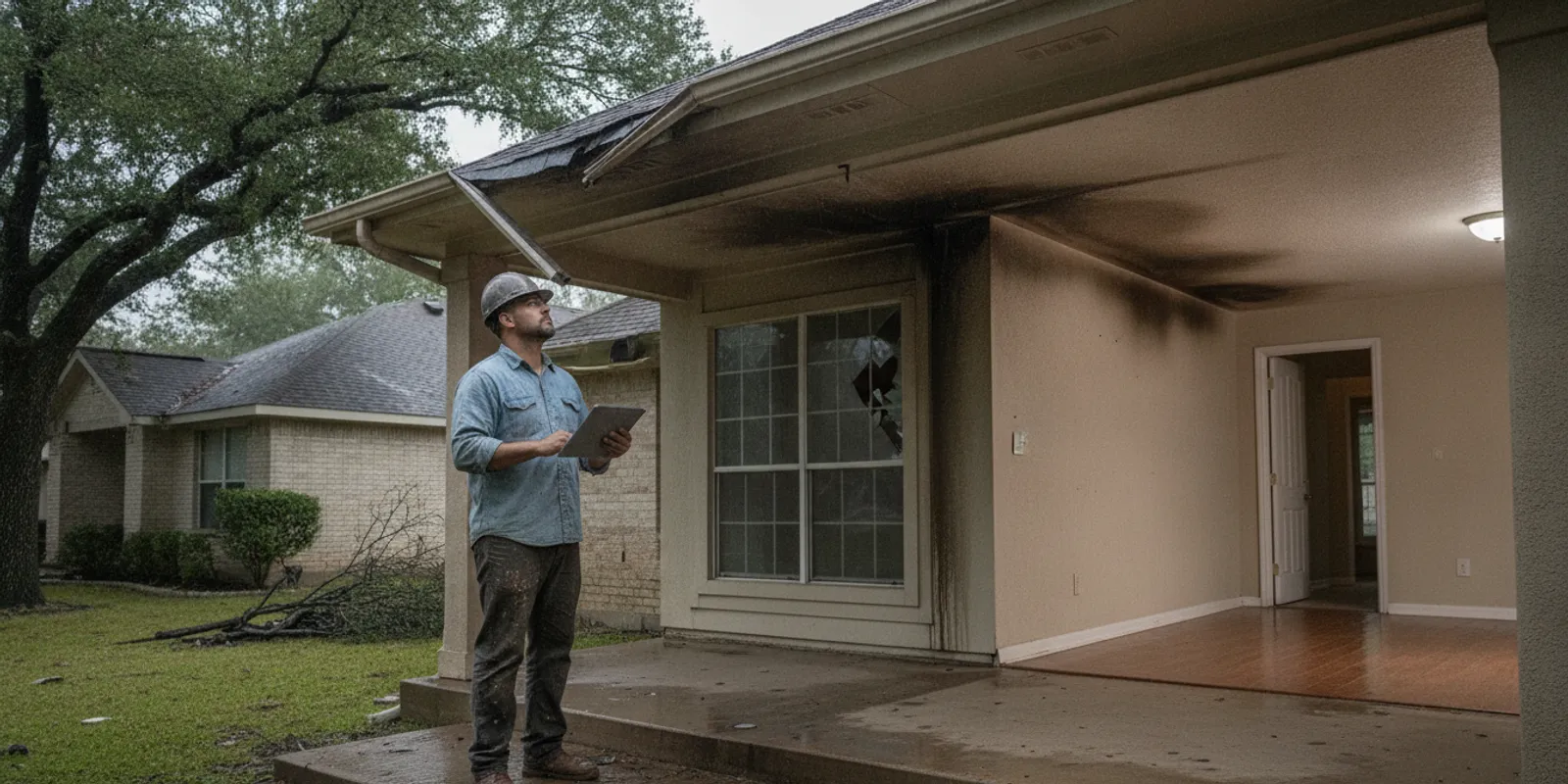
Fire damage can require more than smoke cleanup because smoke and soot may travel beyond the room where the flames were visible. Heat, firefighting water, and the fire itself can also affect utilities and building materials. A complete evaluation helps separate what can be cleaned and salvaged from what may need repair, removal, or reconstruction.
Smoke and soot migration is easy to underestimate. Residue can move into adjoining rooms and settle on paint, carpet, upholstery, drapes, clothing, and other belongings, even when flames never reached those areas. Guidance from the Los Angeles County Department of Public Health recommends thorough cleaning and odor neutralization before affected materials are restored or reused. That work is more involved than wiping down a single wall. It may require inspecting connected spaces, identifying affected contents, and determining which items are suitable for specialized cleaning or should be removed.
Fire damage can affect systems behind the finishes
Visible surfaces are only part of the assessment. Fire damage may extend to electrical, plumbing, heating, and cooling systems, as well as other utilities. These systems can require review before they are used again. The Oklahoma State University Extension advises having utilities checked for safety and using a qualified electrician to evaluate electrical or appliance problems. That is one reason homeowners should not assume a room is safe simply because the smoke odor has faded.
Building materials can also change after the fire is out. Roof coverings, plywood, and sheetrock may become heavy and unstable after exposure to fire hoses or rain. Openings in a roof or wall can allow additional weather exposure, and damaged areas may need temporary protection before permanent work begins. Those conditions call for a careful inspection rather than a cleaning-only estimate.
Firefighting water creates a second restoration concern
Water used to extinguish a fire can move into flooring, walls, ceilings, insulation, and contents. Drying may involve removing standing water and controlling moisture with dehumidifiers and air-moving equipment. Hidden moisture can affect the scope of work even when the original fire damage appears localized. A restoration plan should account for both smoke and soot removal and the condition of materials exposed to water.
Cleaning and reconstruction are different decisions
Some contents and finishes may be salvageable through cleaning, odor treatment, or specialty restoration. Other materials may be too damaged, unsafe, or contaminated to restore effectively. In those cases, the project can move from mitigation and cleaning into repair or structural reconstruction, such as replacing drywall, roofing, flooring, or other affected components.
For Austin-area property owners, Rhino Renovations provides Austin reconstruction and build-back services as part of a broader evaluation and planning process. The goal is to understand the full condition of the property before deciding which work is appropriate, not to treat every fire as a smoke-cleanup-only project.
Frequently Asked Questions
What should I do first after a house fire?
Wait until fire or emergency personnel confirm the property is safe before re-entering. Then contact your insurance company, document visible damage with photos or video, and arrange an inspection that considers the structure, utilities, smoke, soot, and water from firefighting. Oklahoma State University Extension recommends waiting for an all-clear and documenting damage before moving items.
Can a home with fire damage be repaired?
Often, yes, but the answer depends on the extent of fire, heat, smoke, soot, and water damage. An assessment can separate areas that need cleaning from materials that require repair or replacement. Some projects involve smoke cleanup and finish repairs, while others require structural work or a larger rebuild.
What do fire damage restoration services include?
Services may include securing openings, removing water, drying affected areas, cleaning smoke and soot, neutralizing odors, evaluating contents, and repairing or rebuilding damaged parts of the home. A clear scope should explain which work is restoration, which is reconstruction, and how the phases fit together.
How long does fire damage restoration take?
There is no reliable single timeline for every property. The duration depends on fire severity, smoke and soot migration, building size, contents, water impact, and the extent of reconstruction. Ask for a written scope and estimated timeline after the inspection, then expect the plan to be refined as concealed damage is discovered.
How does insurance fit into fire damage reconstruction?
Your insurer and policy determine coverage, while a contractor can help document damage, prepare a reconstruction plan, develop estimates, identify permits, and coordinate project information with the carrier. Rhino's process begins with an on-site evaluation and planning conversation, followed by reconstruction in progress. That coordination supports the project but does not guarantee claim approval or payment.
Ready to Plan the Next Step?
Fire damage restoration services can involve both immediate cleanup and careful reconstruction planning. An on-site conversation can help you understand the work ahead, organize the next steps, and identify questions to discuss with your insurer. Rhino Renovations serves homeowners in Austin and Round Rock with a practical, thorough approach.
Comments