

Kitchen Cabinet Replacement vs Refacing Austin

Updated: 3 days ago
Kitchen Cabinet Replacement vs Refacing Austin
Cabinet doors can look dated while the cabinet boxes behind them are still sturdy and serviceable. That is why the right kitchen update depends on more than appearance. You also need to consider the existing layout, storage needs, moisture history, materials, budget, and how much disruption your household can manage.
For kitchen cabinet replacement vs refacing austin decisions, refacing is worth evaluating when the boxes are sound and the layout still works. Replacement is usually the better fit when you need a new layout, more useful storage, or a cabinet system with structural problems.
Rhino Renovations can help you compare the two paths through an on-site review of the cabinet boxes, kitchen layout, storage goals, materials, and related work. The recommendation should follow your actual kitchen, not a generic online price or schedule.
Refacing replaces doors and drawer fronts while retaining the cabinet boxes. Full replacement removes the existing system and creates more opportunity to change the footprint, interiors, and work zones. For broader planning, see Rhino Renovations' kitchen remodeling services in Austin before deciding which level of work fits your home.
What Does Kitchen Cabinet Replacement vs Refacing in Austin Mean for Your Project?
Kitchen cabinet replacement removes the existing system, while refacing replaces doors and drawer fronts around sound cabinet boxes. Rhino Renovations recommends comparing box condition, layout, storage goals, and related work before choosing. Refacing suits a workable layout; replacement offers more opportunity to change function and cabinet placement.
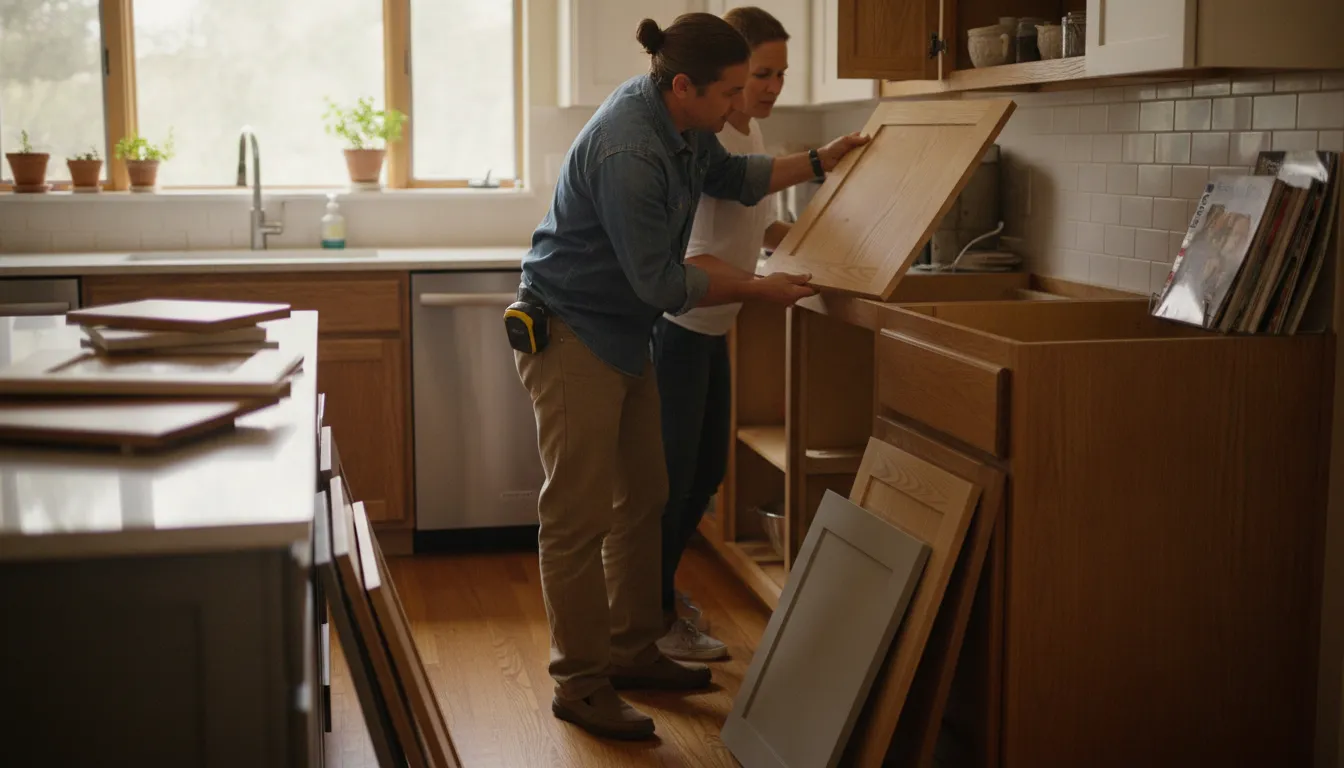
Refacing focuses on the parts you see and touch every day. A contractor evaluates the existing boxes, then installs new doors and drawer fronts and updates the visible finishes. Depending on the selected scope, the work may also include new hardware, matching surface treatments, trim, or filler pieces. When the underlying structure is sound, the result can give the kitchen a substantially different look without removing every cabinet.
Start with the cabinet boxes
The condition of the boxes is the first practical test. They need to be stable enough to support new doors, drawer fronts, hinges, and everyday use. Look for swelling, sagging shelves, loose joints, cracked panels, water damage, or boxes that no longer hold their shape. A cabinet may look acceptable from the front while its construction or fasteners have weakened behind the finish.
Moisture history deserves special attention in any kitchen. A leak under a sink, repeated plumbing issue, or prolonged exposure to humidity can affect particleboard and other cabinet materials. If damage is present, covering it with new fronts may preserve the problem rather than solve it. An inspection helps separate serviceable wear from structural damage that calls for replacement.
What changes, and what stays the same?
New doors and drawer fronts can change color, style, and the visual character of the room. Updated hardware can further refine the result. However, refacing does not fundamentally redesign cabinet interiors. Shelves, openings, and storage zones remain tied to the original installation, so the approach is not ideal for every organization problem.
That distinction is central to a kitchen cabinet replacement vs refacing Austin project. Reusing sound boxes may reduce removal work and preserve a familiar arrangement. It can be a sensible choice when appearance is the main concern and the existing structure is worth keeping.
When refacing is not enough
Refacing cannot correct a fundamentally poor layout, create substantially different cabinet locations, or repair boxes with significant structural failure. It may also fall short when you need accessibility changes, larger drawers, a pantry, or a kitchen organized around different appliances and work zones. In those cases, full replacement provides an opportunity to address structure and layout together.
When Should You Replace Kitchen Cabinets Entirely?
Choose full cabinet replacement when the existing boxes are failing, the layout no longer works, or you need storage and accessibility changes that refacing cannot provide. Rhino Renovations looks at the cabinet system and the way you use the room, not just the finish on the doors.
Replacement is a larger decision, but a larger scope can solve problems that a surface update cannot. The process may include removing the existing cabinetry, preparing the space, installing new boxes, coordinating countertops or backsplashes, and adjusting related work. The exact scope should be defined after measurements and an on-site assessment.
Structural damage or a problematic moisture history
Start with the boxes, not the door style. Swelling, sagging, loose joints, cracked panels, or warped sides can prevent cabinets from supporting new hardware and daily use. Cabinets exposed to recurring leaks or standing water may also have hidden damage. If the underlying boxes are compromised, replacement is generally more appropriate than installing new fronts over them.
A layout that no longer fits your life
Refacing keeps the interior arrangement substantially the same. Replacement is the more suitable path when you want to move cabinet runs, alter work zones, add a pantry, improve circulation, or create room for different appliances. Think about what frustrates you during ordinary use. If the solution requires moving or resizing cabinets, a new cabinet plan is usually the better match.
Storage and accessibility goals require new interiors
Full replacement creates more room for organizational upgrades, including deeper drawers, easier reach zones, pull-out storage, and cabinet dimensions tailored to the people using the kitchen. These functional changes may matter more over time than matching a new finish to an old configuration.
- Box condition:
The cabinets show structural failure, warping, or moisture-related damage.
- Layout:
You want to change the footprint, cabinet locations, appliance placement, or work zones.
- Storage:
The current interiors cannot accommodate the organization your household needs.
- Accessibility:
Door swings, reach ranges, drawer placement, or clearances make daily use difficult.
- Long-term goals:
You want a kitchen designed around a different routine instead of a refreshed version of the old one.
When several signs apply, compare replacement options against the long-term function you want. The lowest amount of visible work is not always the best answer if it leaves the underlying problem in place.
How Should Austin Homeowners Compare Kitchen Cabinet Replacement vs Refacing?
The right kitchen cabinet replacement vs refacing Austin plan depends on cabinet condition, layout, storage goals, materials, and related trades. Rhino Renovations does not use a one-size-fits-all price or schedule. The recommendation should follow an itemized scope developed around your actual kitchen.
Online averages can be useful for understanding the difference between a contained cosmetic project and a broader remodel, but they cannot produce a reliable project quote. A useful estimate separates materials, labor, preparation, removal, installation, and related work instead of presenting one unexplained number.
What determines the project scope?
For refacing, the scope may include new doors and drawer fronts, surface treatment for existing boxes, hardware, trim, and modifications required for a proper fit. The estimate should account for the box condition and whether the existing cabinet system can reliably support the new components.
Replacement estimates involve the cabinetry plus removal, disposal, preparation, leveling, installation, and possible changes to the layout. Costs can also change when the project includes countertops, flooring, plumbing, electrical work, backsplash installation, or other parts of a broader remodel. Ask which items are included, excluded, or dependent on site conditions.
Consideration | Refacing | Replacement |
Primary scope | Updates doors, drawer fronts, and visible surfaces while retaining sound boxes. | Removes existing cabinetry and installs new cabinets, potentially with a different layout. |
Main decision test | Are the boxes sound, and does the current arrangement work? | Do the structure, layout, storage, or accessibility need to change? |
Budget drivers | Door and finish selections, hardware, box condition, and required modifications. | Cabinet materials, removal, installation, layout changes, storage upgrades, and related trades. |
Disruption | Usually more contained, but still requires measuring, fabrication, and installation coordination. | Generally more involved because removal, preparation, installation, and trade coordination may be required. |
Best fit | A sound layout and boxes, with a primary goal of a refreshed appearance. | A dated or unsuitable layout, structural failure, or a need for substantially different function. |
For additional context about planning a kitchen project, read Rhino Renovations' guide to kitchen remodel ROI in Austin. It can help you think about long-term goals without treating any general figure as a guarantee for your home.
How should you plan for disruption?
Refacing is often less disruptive because fewer components are removed, while replacement can affect more of the kitchen and may require coordination with other trades. Neither option should receive a fixed duration before an inspection. Product availability, measurements, selections, approvals, site conditions, and related work all influence the schedule.
Ask for a written sequence of work. Discuss cooking access, appliance handling, floor protection, dust control, daily cleanup, debris removal, and final adjustments. These details affect how manageable the project feels while the kitchen is being renovated.
How Do You Choose Materials and Finishes for an Austin Kitchen?
Choose cabinet materials and finishes by starting with how the kitchen works, then match durability, accessibility, maintenance, and style to the room. Rhino Renovations can help connect those choices to the condition of the existing boxes and the scope of your remodeling goals.
A kitchen supports cooking, eating, socializing, and entertaining. Cabinet doors and finishes need to hold up to the way your household uses the space, including frequent hand contact, cleaning, moisture, heat, and everyday wear. A material that looks attractive but makes daily tasks harder is not a successful choice.
Start with function and long-term use
Decide whether you need easier-to-reach storage, clearer organization, or features that work for people with different ages and abilities. Review door swing, drawer placement, counter access, and the height of frequently used items before finalizing a finish package. If those goals require new cabinet interiors, replacement may fit better than refacing.
Balance durability, maintenance, and waste
Durable materials and careful installation can reduce maintenance over the life of the kitchen. Reusing sound cabinet boxes through refacing can also avoid removing an entire cabinet set. That does not make refacing automatically better. The responsible choice depends on whether the existing structure can deliver the function and durability you need.
Coordinate finishes with the whole room
Use flooring, counters, backsplash, lighting, hardware, and adjacent living spaces as the design context. Austin homeowners may prefer mid-century modern, farmhouse, or modern aesthetics, but a style label should guide the details rather than dictate every surface. Explore these Austin kitchen design styles, then compare door profiles, sheen, hardware, and wood or painted tones against samples in your actual room.
What Should You Ask a Kitchen Contractor Before Deciding?
Ask for a box-by-box assessment, an itemized scope, qualified installation, and a realistic plan before choosing refacing or replacement. Rhino Renovations believes the recommendation should connect cabinet condition with your desired layout, storage, materials, schedule, and long-term use.
- Are the existing cabinet boxes structurally sound?
Ask the contractor to inspect for water damage, swelling, loose joints, sagging, and other failures. Refacing only makes sense when the boxes can support new doors, drawer fronts, and hardware.
- Does the scope include layout or storage changes?
Confirm whether the project keeps the current footprint or adds deeper drawers, organizers, a pantry, or a different cabinet configuration.
- Which materials, finishes, and hardware are included?
Request samples and clarify cabinet construction, door style, finish, hinges, pulls, drawer guides, trim, and filler pieces.
- Who performs and manages the installation?
Ask who handles removal, preparation, fitting, leveling, adjustments, and final installation. Careful work supports long-term durability.
- What licenses or certifications does the company maintain?
Verify credentials and ask who is responsible for permits when they apply. Austin homeowners should understand who is working in the home and how the work is supervised.
- What is the project sequence?
Request a written order for assessment, selections, ordering, removal, installation, and completion. Be cautious about a fixed promise made without an inspection.
- How will the kitchen be protected and cleaned up?
Ask about floor protection, dust control, appliance handling, daily cleanup, debris removal, and final adjustments.
What documentation will I receive?
Make sure the proposal identifies materials, labor, exclusions, payment milestones, change-order procedures, and any applicable warranty terms. For more guidance, read this
guide to choosing a renovation contractor in Austin
.
Rhino Renovations can review the existing boxes, listen to your storage and layout goals, and help you plan the next step. You do not have to guess from photos alone. The goal is a kitchen that works for your household.
If that means refreshing sound cabinetry, the team can help you plan refacing. If you need a more complete replacement, the consultation can clarify that scope.
Frequently Asked Questions
Is cabinet refacing cheaper than replacing in Austin?
Refacing is often the more contained option because it retains sound cabinet boxes. But the final scope still depends on doors, finishes, hardware, labor, box condition, and related work. Ask for an itemized estimate instead of relying on a generic online average.
How do I know if my cabinet boxes are good enough to reface?
Look for stable boxes without significant swelling, warping, sagging, loose joints, cracked panels, or unresolved moisture damage. A professional inspection is useful because hidden damage may not be obvious from the front of the cabinet.
Can refacing change my kitchen layout?
Refacing generally keeps the existing cabinet footprint and interior arrangement. If you need to move cabinet runs, change appliance locations, improve circulation, or add substantially different storage, replacement is usually the better path to evaluate.
Does full replacement always mean a complete kitchen remodel?
No. Full cabinet replacement can be limited to the cabinet system, although countertops, backsplash, flooring, plumbing, electrical work, and appliances may be included if the project requires them. The written scope should identify each related trade and exclusion.
How long will cabinet refacing or replacement take?
There is no responsible universal schedule before an assessment. Measurements, cabinet selections, fabrication, material availability, site conditions, layout changes, and coordination with other work all affect timing. Ask for a written sequence rather than a fixed promise without an inspection.
Schedule a Free Consultation for Your Austin Kitchen
Choosing between refacing and replacement depends on your cabinets' condition, your kitchen goals, and how you want the space to function. Rhino Renovations can help you compare those options with your existing layout and priorities in mind.
During the consultation, Rhino Renovations can assess the cabinet condition, discuss your intended layout and storage changes, and outline the next step for your Austin kitchen project.


Comments